Balance and Coordination: Facilitating Stability and Prevention of Injury.
Coordination and balance are the major components of physical fitness that have a tremendous impact on safety, efficiency, and confidence of the body mobility in the real-life situations. Balance can be said to be the control of body position when stationary, in motion or during movement. Coordination is the capability to control various parts of the body to be able to move or coordinate them in a smooth and accurate way. These two capabilities are in a constant working combination. When the balance and coordination are developed properly, the movements will feel in control and fluid and predictable. In case they are not developed properly, they can make one feel unstable, hesitant or awkward during movement. It is significant to Hydrafacial Montreal and laser hair removal Montreal are two of the most popular treatments for radiant skin. appreciate the need to maintain balance and coordination so that people can appreciate the fact that these two are equally crucial as strength and endurance.
Balance and coordination is always a challenge with everyday life even in simple situations. The nervous system is needed to process information and change body position when walking on uneven surfaces, stepping over an object, reaching an object, bending, turning abruptly or carrying a product when moving. The ear, inner ear, muscles, and joints give signals to the brain which processes the information to create stability. These systems can effectively communicate and therefore, the body will respond promptly and hence appropriately. A decreased coordination can result in slower and wrong reaction of the body, leaving a greater chance of loss of balance.
Balance and coordination of modern lifestyles may be diminished progressively. Prolonged sitting and repetitive actions do not expose one to diverse movement patterns. The nervous system comes used to a limited number of positions. In the long run, it causes the body to lose its capacity to respond to unexpected circumstance like slippery floors or abrupt change of direction. Balance and coordination training is used to reverse this process by re introducing challenges of controlled movement.
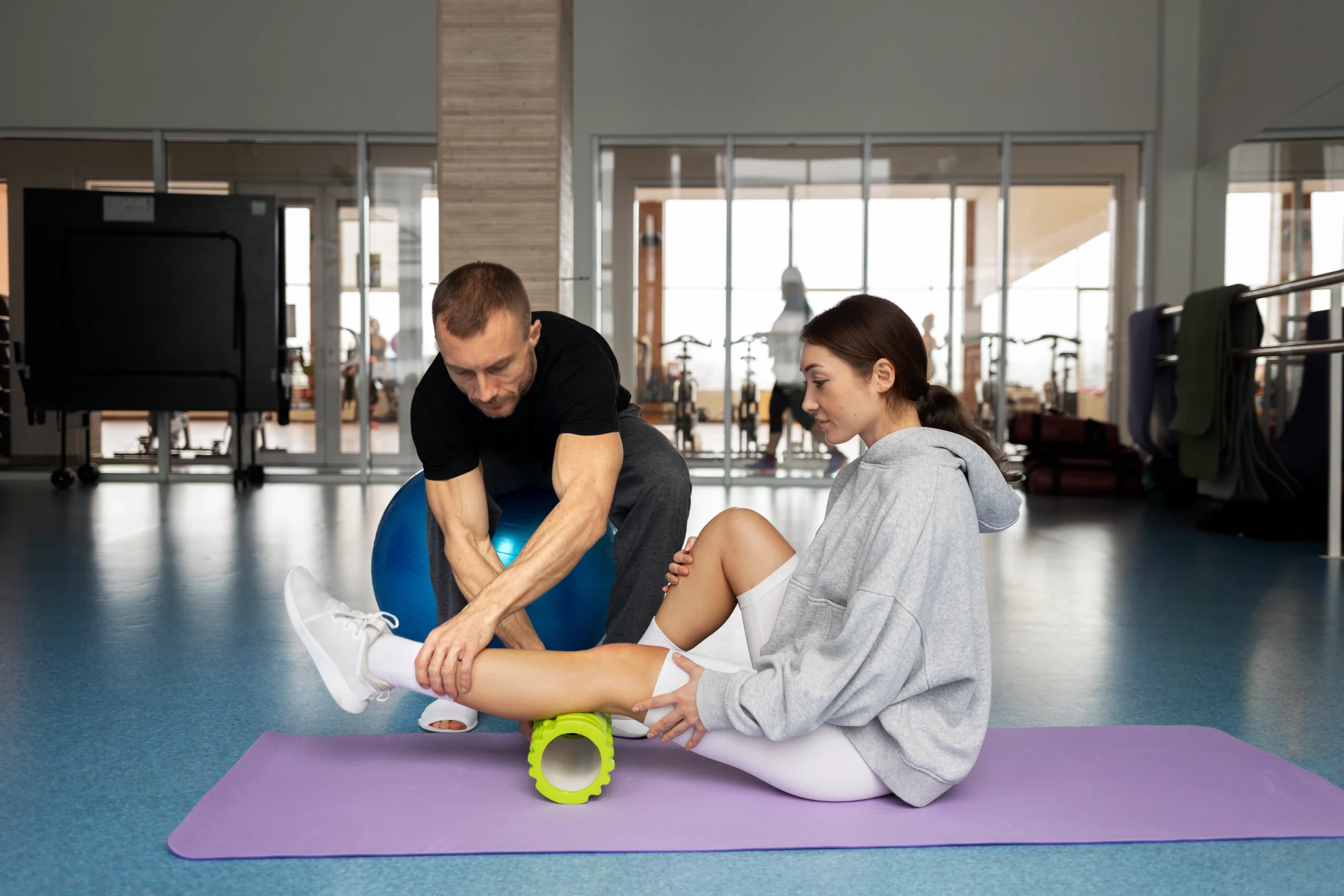
Balance training involves no complex training and equipment. Even the simplest exercises like standing on one leg, moving weight to one side to another, or walking straight is a good starting point. With increase in ability, difficulty may be increased progressively. When it is softer, the eyes are shut, or the movement of the arms is a little more, it is still more difficult and it stimulates further adaptation.
The coordination training is aimed at enhancing the sequence and timing of movements. Stepping patterns, moderate agility movements or rhythmic movements are exercises that are used to train the nervous system to transmit signals more effectively. With time, movements are more precise and smooth.
Better balance and coordination minimize the risk of injuries. As soon as the body is able to react fast to some changes in position, it is unlikely to fall or twist clumsily. Joints, ligaments and muscles are also not subjected to sudden stress through controlled movement.
Posture is also assisted with balance and coordination training. Proper posture allows the spine and the joints to be in good positions. This decreases the strain and pain.
Balance and coordination develop at a slow pace. The little and regular practice amount to substantial change over a period of time.
Balance and coordination training can enhance safer movement, increased confidence and physical resilience on the long-term basis.